BUCKINGHAM PORT-A-WRAP
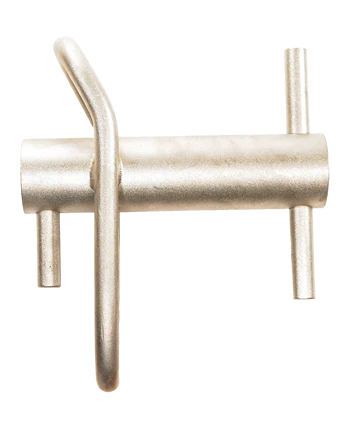
Buckingham Port-A-Wrap Lowering Device
The Buckingham Port-A-Wrap is the industry-standard lowering device for controlled rigging in arborist work. Lowering devices like the Port-A-Wrap control the speed and rate at which heavy logs and limbs are lowered from the tree, protecting your crew, your equipment, and the property below. Before using this product, be sure to fully understand the forces involved in rigging large limbs.
Available in Mini, Medium, Large, and Extra Large sizes to match your rope diameter and load requirements. All versions are constructed from nickel-plated steel for durability and corrosion resistance.
Specifications by Size
- Mini (K601-MN): Rope capacity up to 1/2" — Working Load: 1,000 lbs — Weight: 1 lb 7 oz
- Medium (K601-N): Rope capacity up to 9/16" — Working Load: 2,000 lbs — Weight: 4 lbs
- Large (K601-LN): Rope capacity up to 3/4" — Working Load: 2,000 lbs — Weight: 7.25 lbs
- Extra Large (K601-XN): For the heaviest rigging applications — contact us for specs
Key Features
- Controls descent speed of heavy logs and limbs during rigging
- Nickel-plated steel construction for durability and corrosion resistance
- Multiple sizes to match rope diameter and load requirements
- Industry-standard design trusted by professional arborists
- Made by Buckingham Mfg. in the USA
Frequently Asked Questions
Which size should I choose?
Match the Port-A-Wrap size to your rope diameter: Mini for 1/2" rope (1,000 lb WL), Medium for up to 9/16" rope (2,000 lb WL), and Large for up to 3/4" rope (2,000 lb WL). Always select a size rated for the loads you expect to encounter.
Is there a powder-coated version?
Yes — see the Buckingham Port-A-Wrap Powder Coated Steel for an alternative finish option.
Where can I learn more about rigging forces?
Understanding the physics of rigging is critical for safe use. We recommend reviewing the TCIA Best Practices for Rigging in Arboriculture manual before using any lowering device.
Original: $253.15
-70%$253.15
$75.94Product Information
Product Information
Shipping & Returns
Shipping & Returns
Description
Buckingham Port-A-Wrap Lowering Device
The Buckingham Port-A-Wrap is the industry-standard lowering device for controlled rigging in arborist work. Lowering devices like the Port-A-Wrap control the speed and rate at which heavy logs and limbs are lowered from the tree, protecting your crew, your equipment, and the property below. Before using this product, be sure to fully understand the forces involved in rigging large limbs.
Available in Mini, Medium, Large, and Extra Large sizes to match your rope diameter and load requirements. All versions are constructed from nickel-plated steel for durability and corrosion resistance.
Specifications by Size
- Mini (K601-MN): Rope capacity up to 1/2" — Working Load: 1,000 lbs — Weight: 1 lb 7 oz
- Medium (K601-N): Rope capacity up to 9/16" — Working Load: 2,000 lbs — Weight: 4 lbs
- Large (K601-LN): Rope capacity up to 3/4" — Working Load: 2,000 lbs — Weight: 7.25 lbs
- Extra Large (K601-XN): For the heaviest rigging applications — contact us for specs
Key Features
- Controls descent speed of heavy logs and limbs during rigging
- Nickel-plated steel construction for durability and corrosion resistance
- Multiple sizes to match rope diameter and load requirements
- Industry-standard design trusted by professional arborists
- Made by Buckingham Mfg. in the USA
Frequently Asked Questions
Which size should I choose?
Match the Port-A-Wrap size to your rope diameter: Mini for 1/2" rope (1,000 lb WL), Medium for up to 9/16" rope (2,000 lb WL), and Large for up to 3/4" rope (2,000 lb WL). Always select a size rated for the loads you expect to encounter.
Is there a powder-coated version?
Yes — see the Buckingham Port-A-Wrap Powder Coated Steel for an alternative finish option.
Where can I learn more about rigging forces?
Understanding the physics of rigging is critical for safe use. We recommend reviewing the TCIA Best Practices for Rigging in Arboriculture manual before using any lowering device.